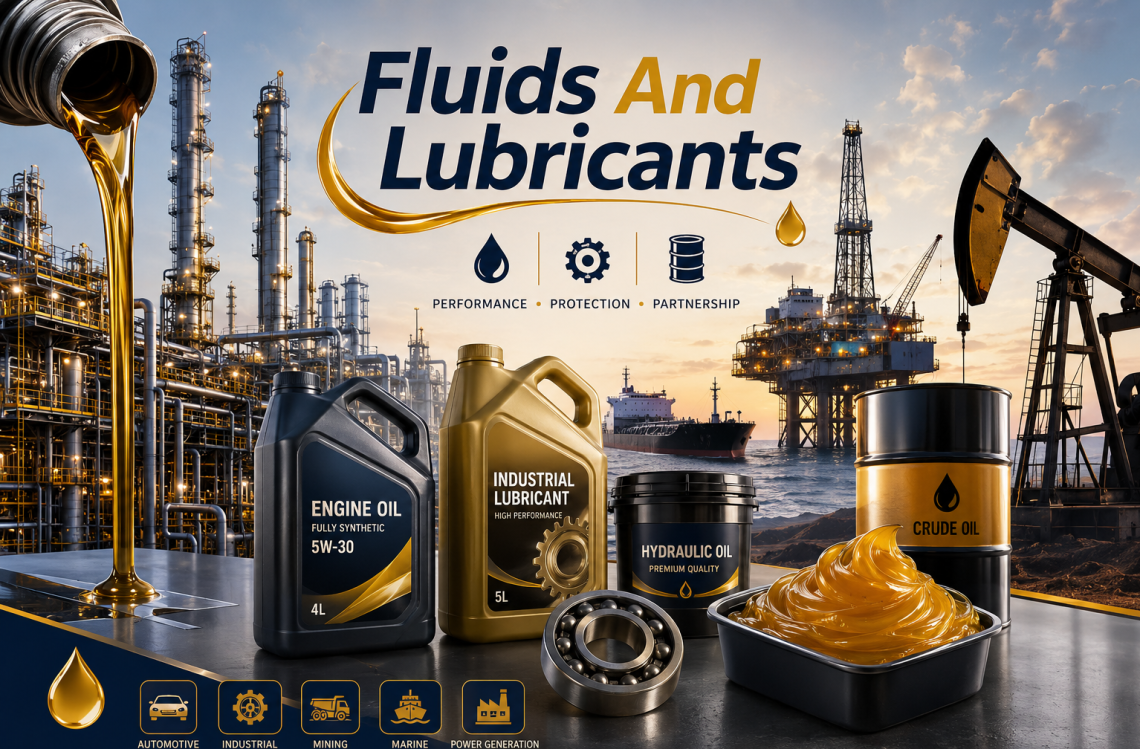
Kunlun Lubricants has launched a new range of hydraulic oils designed to comply with China’s national standard GB 11118-2026.
As a subsidiary of China National Petroleum Corporation (CNPC), Kunlun Lubricants has officially concluded its nationwide “One City, One Strategy” campaign in Xiamen, following a series of events held across major Chinese cities since its launch in Xi’an.
This industrial milestone highlights several key developments:
- Regulatory compliance: The new hydraulic oil range incorporates the requirements of China’s GB 11118-2026 national standard, which establishes updated technical requirements for hydraulic fluids. The range is designed to meet the performance needs of industrial machinery and advanced technological equipment.
- Tailored solutions: Through its “One City, One Strategy” initiative, Kunlun Lubricants has adapted its lubrication solutions—including industrial lubricants and lubricants for commercial and passenger vehicles—to the specific economic, industrial and environmental conditions of each region.
- Support for heavy industry: As an established lubricant supplier to major Chinese infrastructure projects, including high-speed rail, nuclear power and wind energy, Kunlun Lubricants is using this standards-driven product development to support technological advancement and the transition towards more sustainable manufacturing.
1. GB 11118-2026: Standard Overview
Official title: GB 11118-2026 — Hydraulic Fluids (L-HL, L-HM, L-HV, L-HS and L-HG Types)
| Item | Details |
|---|---|
| Publication date | 28 January 2026 |
| Effective date | 1 February 2027 |
| Status as of 26 October 2026 | Published but not yet in force |
| Previous standard | GB 11118.1-2011 |
| Classification | E39 (China); ICS 75.120 (hydraulic fluids) |
| Regulatory status | Mandatory national standard, according to the official listing |
2. Purpose and Scope
GB 11118-2026 establishes requirements for the classification, performance and quality control of hydraulic oils belonging to the L-HL, L-HM, L-HV, L-HS and L-HG categories.
The standard applies to hydraulic fluids used in hydrostatic systems, in which energy is transmitted through a pressurised fluid.
These fluids are commonly used in:
- Industrial machinery and manufacturing equipment.
- Construction machinery and mobile equipment.
- Hydraulic systems operating under high pressure.
- Equipment requiring suitable viscosity performance across varying temperatures.
- Systems where protection against wear, corrosion and oxidation is essential.
The precise scope should be assessed against the full official text, particularly where specialised applications are concerned.
3. The Five Hydraulic Oil Categories Covered by the Standard
The standard covers five main hydraulic oil categories, explicitly distinguishing between standard-pressure and high-pressure L-HM oils.
L-HL — Anti-Rust and Antioxidant Hydraulic Oil
Designed for hydraulic systems where protection against rust and oxidation is a primary requirement. This category is suitable for applications with relatively limited anti-wear demands.

L-HM — Anti-Wear Hydraulic Oil
Developed for hydraulic systems requiring enhanced protection against wear, particularly for pumps and other mechanical components. The 2026 standard explicitly distinguishes between standard L-HM and high-pressure L-HM categories.

L-HV — High Viscosity Index Hydraulic Oil
Suitable for equipment exposed to significant temperature variations, where maintaining stable viscosity across the operating temperature range is particularly important.

L-HS — Special-Performance Hydraulic Oil
Intended for applications requiring specific operating characteristics. The precise performance properties and acceptance limits should be verified against the full text of the standard.

L-HG — Hydraulic Oil for Machine Tools
Associated with applications in which hydraulic lubrication must be compatible with machine-tool requirements, particularly the lubrication and operating characteristics of relevant components.

Note: These descriptions summarise the general technical meaning of each category. They do not replace the formal definitions or test criteria specified in GB 11118-2026.
4. Technical Requirements Covered by the Standard
According to the published description, the standard addresses six main areas.
| Area | Scope |
|---|---|
| Classification and designation | Identification of L-HL, standard L-HM, high-pressure L-HM, L-HV, L-HS and L-HG oils. |
| Technical requirements | Quality criteria used to assess whether hydraulic oils meet the requirements of their declared categories. |
| Test methods | Procedures for measuring and verifying specified properties. |
| Inspection rules | Product inspection procedures and acceptance criteria. |
| Marking and packaging | Product identification and packaging requirements. |
| Transport, storage and receipt | Conditions for product preservation, delivery and incoming inspection. |
Key Properties to Assess During Compliance Testing
When preparing a technical compliance dossier, the following properties are particularly relevant to hydraulic oils. This list serves as a technical assessment framework rather than an exhaustive reproduction of the standard’s numerical requirements.
- Kinematic viscosity: The fluid’s suitability for operation within the intended temperature range.
- Viscosity index: The extent to which viscosity changes with temperature.
- Anti-wear performance: The ability to protect pumps and components exposed to mechanical contact.
- Oxidation stability: The fluid’s resistance to ageing and degradation.
- Corrosion and rust protection: The ability to protect metal components within the hydraulic circuit.
- Demulsibility: The ability to separate water from the oil.
- Foaming and air release: The control of air bubble formation, persistence and release.
- Equipment compatibility: Suitability for the materials, pumps and operating conditions involved.
Before making a formal declaration of compliance, the applicable numerical limits, units, test methods and any exceptions must be checked against the complete official document.
5. What Has Changed Compared with GB 11118.1-2011?
The confirmed change is that GB 11118-2026 replaces GB 11118.1-2011 in full from its effective date. The new title retains the five main hydraulic oil categories, while the published scope explicitly distinguishes between standard L-HM and high-pressure L-HM oils.
| Comparison item | GB 11118.1-2011 | GB 11118-2026 |
|---|---|---|
| Edition | Previous edition | New edition |
| Publication date | 14 September 2011 | 28 January 2026 |
| Effective date | 1 June 2012 | 1 February 2027 |
| Replacement status | Superseded by the new edition | Replaces GB 11118.1-2011 |
| Classification | L-HL, L-HM, L-HV, L-HS and L-HG | Same main categories, with an explicit distinction between standard and high-pressure L-HM oils |
| Numerical requirements | Defined in the 2011 edition | Must be compared provision by provision against the 2026 edition |
Documentation limitation: The complete set of numerical changes between the two editions has not been independently verified from the official documents available for this summary. It would therefore be premature to claim that specific viscosity limits, test methods or performance thresholds have been increased or reduced without a detailed comparison of the full texts.
6. Regulatory Status and Practical Implications
According to the Chinese national standards information portal, GB 11118-2026 is classified as a mandatory national standard and is scheduled to enter into force on 1 February 2027.
Manufacturers, importers and users of hydraulic oils should consider the following actions ahead of the effective date.
1. Verify product classification
Confirm the exact category of each hydraulic oil and its compatibility with the relevant machinery manufacturer’s specifications.
2. Review test reports
Compare laboratory results with the requirements and test methods specified in the 2026 edition.
3. Update technical documentation
Review technical data sheets, certificates, quality-control procedures, product labels and procurement documentation.
4. Check transitional provisions
Determine how the new standard affects products already manufactured, existing inventories and ongoing contracts, taking the applicable regulatory provisions into account.
7. Where to Access the Official Standard
The following resources provide information on the standard’s publication, status and technical scope.
Official Chinese National Standards Portal
Provides standard identification, regulatory status, publication and implementation dates, and access to the official document.
National Standards Information Service
Provides detailed standard information, including the replacement of the 2011 edition and classification details.
View the detailed standard record
Additional Technical Reference
Provides a supplementary description of the standard’s scope and the hydraulic oil categories covered.
Consult the technical overview
classification details.
View the detailed standard record
Additional Technical Reference
Provides a supplementary description of the standard’s scope and the hydraulic oil categories covered.
Consult the technical overview
Conclusion
GB 11118-2026 is China’s new national standard governing L-HL, L-HM, L-HV, L-HS and L-HG hydraulic oils. Published on 28 January 2026, it is scheduled to take effect on 1 February 2027, replacing GB 11118.1-2011 in full.
For industrial applications and companies exporting hydraulic oils to China, the key priority is to go beyond the published summary and consult the complete standard. A detailed comparison of the new numerical requirements with the specifications and test results of each product is essential to establish compliance.
Kunlun Lubricants’ new product range and its nationwide “One City, One Strategy” campaign reflect the company’s efforts to align its lubrication solutions with evolving technical requirements and the specific needs of China’s industrial sectors.
Editorial note: I have used a professional, technical English style suitable for an industry article or corporate publication. I have also preserved the distinction between confirmed information and technical details that still require verification against the full standard, rather than presenting unverified performance improvements as established facts.
En savoir plus sur Fluides et Lubrifiants
Abonnez-vous pour recevoir les derniers articles par e-mail.


